
Carrying on Minnan culture: Quanzhou's comprehensive exhibition of intangible cultural heritage opens
According to China News Service: October 17 is International Day for the Intangible Cultural Heritage. With the theme 'Inheriting Minnan Culture · Sharing the Beauty of Intangible Heritage,' the 'Passing Down Craftsmanship · Echoing at the Sea Corner — Quanzhou Human Intangible Cultural Heritage Comprehensive Exhibition' opened on the 17th at the Nanyin Art Garden in Quanzhou, Fujian.
This event is hosted by the Quanzhou Municipal Bureau of Culture, Radio, Television and Tourism, and organized by the Quanzhou Cultural Center (Quanzhou Intangible Cultural Heritage Protection Center). It brings together representative inheritors of intangible cultural heritage at all levels, combining static exhibitions with live performances, connecting skilled craftsmanship through diverse heritage, and telling the story of China's intangible cultural heritage protection.
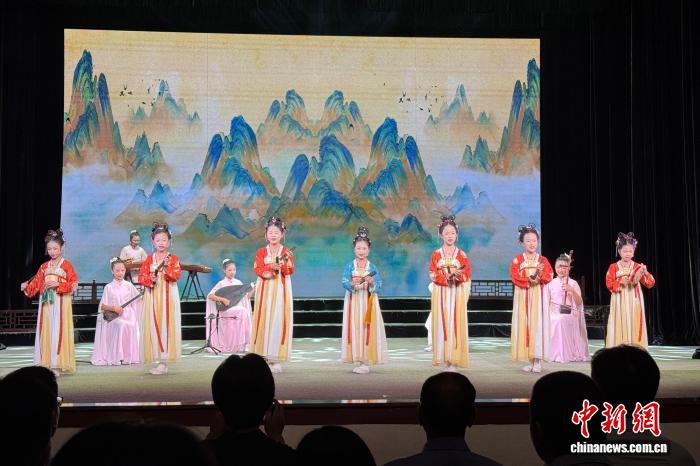
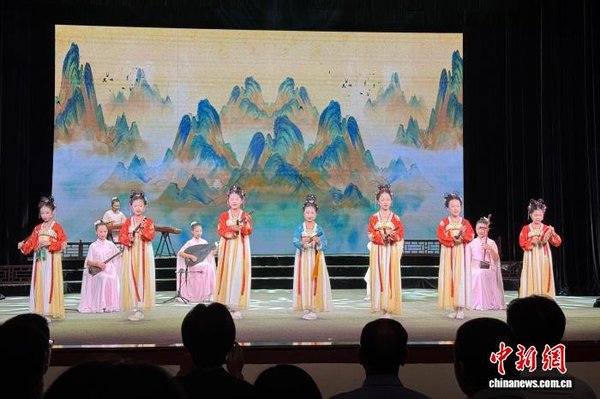
On October 17th, the 'Passing Down Craftsmanship · Resonating at the Seaside — Quanzhou Human Intangible Cultural Heritage Comprehensive Exhibition' opened in Quanzhou, Fujian. The picture shows a children's Nanyin performance 'Blessings Fill Citong City.' Photo by Ke Ning.
On that day, the string puppet show "Lion Dance" took the lead, with every delicate thread dancing to reflect the many aspects of life, showcasing the rich results of Fuzhou puppetry talent being passed down. The millennium-old music, Nanyin, performed a medley, highlighting a balance between tradition and innovation in its inheritance: the children's Nanyin piece "Fu Ying Cìtóng City" continued the ancient musical lineage with crisp young voices, demonstrating the success of bringing traditional culture into schools to nurture character; the percussion piece "Spring Outing" creatively used traditional 'xià sì guǎn' instruments to depict the lively markets of southern Fujian, giving new life to this ancient genre; the classic a cappella piece "Deeper Silence" combined xiao flute and pipa, keeping rhythm and beat, restoring Nanyin's refined and authentic artistic essence. The tea dance "Tea Ceremony" showcased the cultural etiquette of Anxi Tieguanyin tea, while the string puppet show "Zhong Kui Drunk" highlighted the expressive mastery of puppetry art. Closing the event, the hand puppet show "Da Ming Fu" brought classic literature to life, demonstrating the peak artistry of southern-style glove puppetry within a small frame. Ancient traditions and contemporary aesthetics shone together, giving fresh vitality to the stage and breathing new life into traditional cultural heritage.
In the interactive area of representative intangible cultural heritage projects, four major heavyweight projects are showcased one after another: Chinese paper cutting (Quanzhou Li Yaobao carved paper), traditional Chinese tea-making techniques and related customs (Anxi Tieguanyin making techniques), traditional Chinese wooden building construction techniques (Minnan residential architecture), and Chinese watertight compartmentalized Fortune Ships manufacturing techniques.
As the only city in the country to have all three major UNESCO intangible cultural heritage listings, Quanzhou is rooted in the rich historical soil of being the 'World Maritime Trade Center of Song and Yuan China.' It's not only a historical hub of the Maritime Silk Road but also an important point for cultural exchange between the East and the West.
A relevant official from the Quanzhou Municipal Bureau of Culture, Radio, Television, and Tourism said that this exhibition makes full use of the core role of representative inheritors of intangible cultural heritage. Through multiple forms such as displaying intangible cultural heritage artifacts, live demonstrations of skills, and in-depth cultural explanations, it breaks down the craftsmanship behind traditional techniques and uncovers the Chinese wisdom in creation as well as the historical depth of the Maritime Silk Road. Visitors can get up close with traditional craftsmanship and experience the excellence of Chinese traditional culture in a tangible, visible, and touchable way.